


EV Charging in Westchester and Rockland County
EV Charging in Westchester and Rockland County: A Guide for Electric Vehicle Owners
One of the first questions people often ask when considering an electric vehicle is simple:
“Where am I going to charge it?”
For drivers in Westchester and Rockland counties, the answer is increasingly simple: there are more charging options than ever.
Public charging stations can be found throughout the region, while home charging allows many EV owners to start each day with a charged battery. And as charging infrastructure continues to expand, electric vehicle drivers have more options for charging at shopping centers, workplaces, hotels, parking facilities, major travel corridors and other destinations.
At Pepe Auto Group, our six dealerships represent Mercedes-Benz, Cadillac, Porsche, Genesis and Audi, and our teams can help customers understand the charging capabilities and requirements of the EV or plug-in hybrid they are considering.
EV Charging Is Becoming Part of Everyday Driving
New York State continues to expand its electric vehicle charging infrastructure.
The state supports the development of charging stations through programs including Charge Ready NY and the National Electric Vehicle Infrastructure program, while the U.S. Department of Energy maintains an up-to-date database of public charging locations.
For drivers in Westchester and Rockland counties, that means EV charging isn’t limited to a single network or a handful of locations.
You can find chargers at:
- Shopping centers
- Grocery stores
- Hotels
- Parking garages
- Restaurants
- Workplaces
- Service areas
- Highway corridors
- Municipal parking facilities
- Dedicated charging locations
- Private residences
The charging network continues to evolve, so the best way to find an available charger is to use a current charging app or station locator rather than relying on a static list.
Understanding the Three Main Types of EV Charging
Not all charging stations work at the same speed.
Understanding the difference between Level 1, Level 2 and DC fast charging makes it easier to plan how and where you charge.
Level 1 Charging
Level 1 charging uses a standard household electrical outlet.
It is the slowest form of EV charging, but it can be useful when a vehicle is parked for long periods and daily driving requirements are relatively modest.
For many EV owners, Level 1 can be sufficient for overnight charging in certain circumstances.
Level 2 Charging
Level 2 charging uses higher-voltage electrical service and is significantly faster than a standard household outlet.
NYSERDA notes that Level 2 charging can provide approximately 20 miles of range per hour, depending on the vehicle and charger, with several hours often providing a substantial charge.
Level 2 chargers are commonly found at:
- Homes
- Workplaces
- Shopping centers
- Hotels
- Parking facilities
- Dealerships
- Restaurants
- Public charging locations
For many EV owners, Level 2 is the primary way they charge their vehicle.
DC Fast Charging
DC fast charging is designed for situations when you need to add a significant amount of range relatively quickly.
These chargers are particularly useful for:
- Road trips
- Highway travel
- Long-distance driving
- Quick charging stops
- Drivers who don’t have access to home charging
NYSERDA notes that DC fast chargers can provide a substantial amount of charge in a relatively short period, although charging speed varies by the vehicle, charger and battery conditions.
Charging Your EV at Home
For many EV owners, the most convenient place to charge is home.
Instead of making a special trip to a gas station, you can plug in when you arrive home and allow your vehicle to charge while you’re sleeping or going about your day.
A Level 2 home charger can make this particularly convenient for drivers who regularly travel longer distances.
Before installing a home charger, homeowners should have a qualified electrician evaluate their home’s electrical system and determine what equipment and electrical capacity are appropriate.
Charging Around Westchester County
Westchester County has a growing network of public charging options.
Public charging is available in communities throughout the county, including locations in and around:
- White Plains
- New Rochelle
- Yonkers
- Tarrytown
- Harrison
- Dobbs Ferry
- Hartsdale
- Westchester’s northern communities
- Major shopping and commercial centers
For example, public fast-charging locations currently include sites in White Plains, Hartsdale, New Rochelle and other Westchester communities, while Tesla’s network includes Supercharger locations in communities such as West Harrison, Tarrytown, Dobbs Ferry and Yonkers.
Because stations can be added, removed, temporarily unavailable or occupied, EV drivers should check live availability before heading to a charger.
Charging Around Rockland County
Rockland County also offers a growing mix of charging options.
Public charging can be found in communities including:
- Nanuet
- West Nyack
- Orangeburg
- Suffern
- Stony Point
- Garnerville
- Congers
- Other Rockland communities
Current charging options include Tesla Superchargers, EVgo, EVolve NY and other public charging providers.
Tesla’s network, for example, currently includes Supercharger locations in Nanuet, West Nyack, Orangeburg and Suffern. Tesla identifies its Suffern location as supporting compatible non-Tesla EVs and offering up to 325 kW of charging power.
What Is NACS?
One of the biggest changes in EV charging is the adoption of the North American Charging Standard, or NACS.
The connector originally associated with Tesla has increasingly become part of the broader U.S. EV charging ecosystem.
Many automakers now offer NACS-equipped vehicles or approved adapters that allow compatible vehicles to use charging networks that previously were primarily associated with Tesla.
NYSERDA specifically notes that many manufacturers and dealerships offer NACS adapters as the connector becomes more widely adopted.
Can My Non-Tesla EV Use a Tesla Supercharger?
Sometimes.
This is an important distinction.
Not every Tesla charging location is automatically available to every non-Tesla EV.
Access depends on:
- The vehicle
- The vehicle’s charging hardware
- Whether an approved adapter is required
- The specific Tesla charging location
- Whether that location has been opened to compatible non-Tesla vehicles
- The charging network’s current requirements
Some Tesla Supercharger locations in our region are already listed as available to compatible non-Tesla EVs.
For example, Tesla currently identifies the West Harrison Supercharger as open to other EVs, while its Suffern location lists an adapter for other EVs.
The important takeaway is:
Don’t assume every Tesla Supercharger works with every EV. Check compatibility before making the trip.
Adapters Are Expanding Your Charging Options
Many of today’s EVs can use an approved adapter to connect to charging equipment with a different connector.
This can be particularly useful for drivers whose vehicles use a CCS charging port but have access to an automaker-approved NACS adapter.
Across the Pepe Auto Group, many of our current EV models have approved adapter solutions available that can expand the number of charging locations available to their owners.
Because adapter availability varies by brand, model and model year, customers should check with their dealership regarding the appropriate adapter for their specific vehicle.
Always use an adapter approved for your vehicle and charging system.
Tesla Charging Is No Longer Just for Tesla Owners
For years, Tesla’s Supercharger network was primarily associated with Tesla vehicles.
That is changing.
As more automakers adopt NACS and compatible non-Tesla EVs gain access to portions of the Supercharger network, the number of charging options available to EV drivers continues to expand.
This is particularly relevant for drivers in the New York metropolitan area, where Tesla Superchargers are located along major routes and near shopping and commercial destinations.
However, availability remains location- and vehicle-specific, so checking the Tesla app, your vehicle’s navigation system or another current charging resource is important before making a charging stop.
Planning an EV Road Trip
Once you understand how your vehicle charges, planning a longer trip becomes much easier.
Before leaving, consider:
1. Know Your Vehicle’s Range
Understand how far your EV typically travels on a full charge.
Remember that actual range can vary based on:
- Temperature
- Highway speed
- Driving style
- Terrain
- Climate-control use
- Passenger and cargo weight
2. Know Your Charging Speed
Learn how quickly your vehicle can accept Level 2 and DC fast charging.
A charger capable of delivering very high power doesn’t necessarily mean your vehicle will charge at that rate.
The vehicle determines how much power it can accept.
3. Plan Your Stops
Use your vehicle’s navigation system or a charging app to identify charging locations along your route.
The DOE’s Alternative Fueling Station Locator provides current information about public charging stations, including charging type, ports and other station information.
4. Have a Backup
If you’re traveling a significant distance, consider identifying another charging location nearby.
A charger can occasionally be occupied, temporarily unavailable or operating at a reduced rate.
5. Don’t Always Charge to 100%
For everyday driving, you may not need to charge your EV to 100% every time.
Your vehicle manufacturer’s recommendations should take priority, but many drivers can simply charge enough to meet their daily needs.
For road trips, a faster DC charging stop may be more efficient than waiting for a full charge.
Winter EV Charging in Westchester and Rockland
Winter presents some additional considerations for EV owners.
Cold temperatures can temporarily reduce an EV’s driving range and affect charging performance.
NYSERDA recommends preconditioning the vehicle and battery while the vehicle is still plugged in when possible. It also recommends avoiding allowing the battery to become extremely depleted in cold conditions.
For local drivers, that means winter preparation can include:
- Charging before a major snowstorm
- Preconditioning while plugged in
- Allowing additional range for cold-weather driving
- Checking charging locations before longer trips
- Keeping your vehicle’s charging equipment accessible
- Planning additional charging time when temperatures are very low
Charging Etiquette
As EV ownership increases, good charging etiquette becomes more important.
If you’re using a public charger:
Charge what you need.
If other drivers are waiting, avoid occupying a fast charger longer than necessary.
Move when you’re finished.
Once your vehicle is sufficiently charged, move it so another driver can use the space.
Don’t block a charger you can’t use.
Charging spaces are specifically designed for vehicles that need to charge.
Check the charging station before arriving.
Apps can often show station status and, in some cases, whether individual stalls are occupied.
How to Find EV Charging Stations
There are several ways to locate a charger.
Your Vehicle’s Navigation System
Many newer EVs can identify charging stations and incorporate charging stops into route planning.
Some systems can also estimate the battery state of charge when you arrive.
Charging Network Apps
Depending on your vehicle, you may use apps from charging providers such as:
- Tesla
- ChargePoint
- Electrify America
- EVgo
- Other regional networks
PlugShare
PlugShare provides a broad directory of charging locations and allows drivers to filter stations by connector, charging speed and network.
NYSERDA / U.S. Department of Energy Station Locator
NYSERDA directs New York EV drivers to the U.S. Department of Energy’s Alternative Fueling Station Locator, which provides current station information throughout New York and the country.
EV Charging Across the Pepe Auto Group
Pepe Auto Group represents several premium and luxury brands with growing EV and electrified-vehicle lineups.
Our six dealerships include:
- Mercedes-Benz of White Plains
- Mercedes-Benz of New Rochelle
- Pepe Cadillac
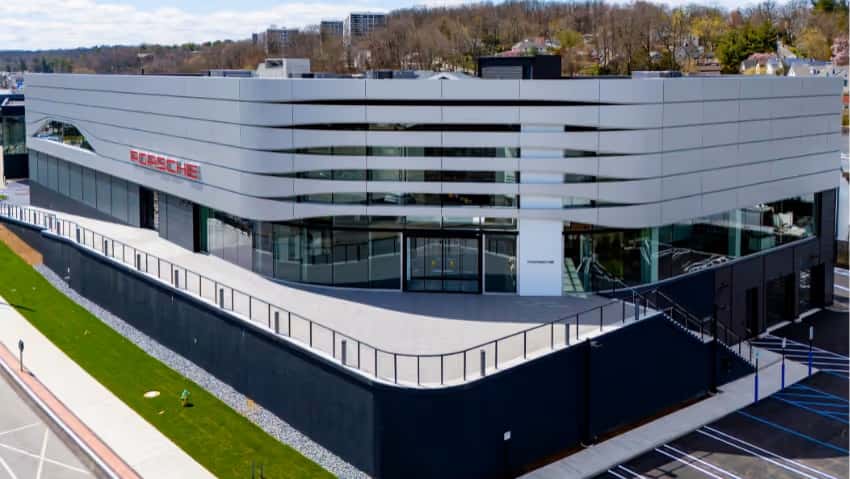
- Porsche White Plains
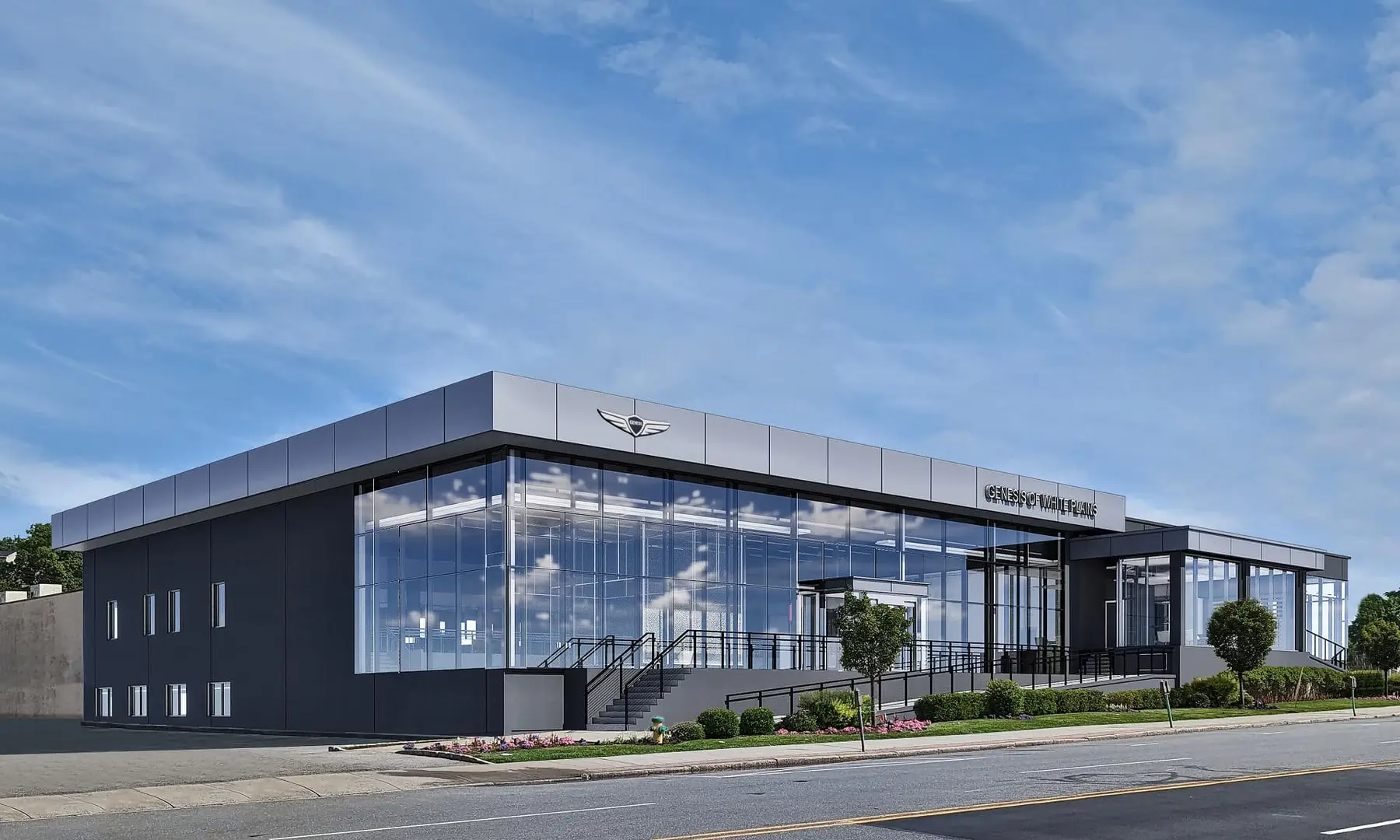
- Genesis of White Plains
- Audi Nyack
Each brand has its own EV technology, charging specifications and available charging equipment.
For example, Cadillac offers models such as the LYRIQ, OPTIQ, VISTIQ and ESCALADE IQ, while Genesis offers all-electric models including the GV60 and additional electrified vehicles. Mercedes-Benz, Porsche and Audi also offer growing EV lineups.
Because charging connectors, adapters and charging capabilities can vary by model and model year, our teams can help customers understand exactly what they need to charge their particular vehicle.
Your EV Can Have More Charging Options Than You Think
The charging landscape has changed considerably.
You don’t necessarily need to find a charger operated by your vehicle manufacturer.
Depending on your vehicle, you may be able to use:
- Home Level 1 charging
- Home Level 2 charging
- Public Level 2 charging
- DC fast charging
- NACS charging
- Approved NACS adapters
- Multiple charging networks
- Tesla Superchargers where compatible
That growing interoperability is making EV ownership increasingly flexible.
The Future of EV Charging in Westchester and Rockland
The charging network isn’t finished—and that’s a good thing.
New York continues to invest in EV charging infrastructure, including programs designed to expand DC fast charging along major travel corridors and in communities that need additional charging capacity.
The state’s current EV infrastructure efforts include designated charging corridors such as I-87, I-287, I-684, I-95 and I-84, all of which are important transportation routes for drivers in the New York metropolitan region.
As charging infrastructure continues to expand and more vehicles become compatible with NACS, EV drivers should have an increasing number of options for charging close to home and on longer trips.
Considering an EV?
If you’re considering your first electric vehicle, charging shouldn’t be something you have to figure out on your own.
The team at Pepe Auto Group can help you understand:
- How your vehicle charges
- How quickly it charges
- What type of home charger you may need
- Which public charging networks are compatible
- Whether an approved adapter is available
- How to use DC fast charging
- How to plan longer trips
- What to expect during winter driving
Whether you’re considering an electric Mercedes-Benz, Cadillac, Porsche, Genesis or Audi, we can help you understand the charging requirements before you make your decision.
EV ownership is about more than the vehicle. It’s about having a charging plan that fits your life.
Frequently Asked Questions About EV Charging in Westchester and Rockland County
Are there enough EV charging stations in Westchester County?
Westchester County has a growing network of public Level 2 and DC fast-charging stations, including locations in White Plains, New Rochelle, Yonkers, Tarrytown, Harrison, Hartsdale and other communities. The network continues to expand, and drivers should use a current station locator to check availability.
Are there EV chargers in Rockland County?
Yes. Public charging is available throughout Rockland County, including areas such as Nanuet, West Nyack, Orangeburg, Suffern, Stony Point and other communities.
Can a non-Tesla EV use a Tesla Supercharger?
Some can. Tesla has opened certain Supercharger locations to compatible non-Tesla EVs, but availability varies by location and vehicle. An approved adapter may also be required. Always verify compatibility before traveling to a specific Supercharger.
What is a NACS adapter?
A NACS adapter can allow a compatible EV with a different charging connector to connect to charging equipment using the North American Charging Standard. Adapter availability and compatibility depend on the vehicle and model year.
Can I charge an EV at home?
Yes. EVs can generally be charged at home using Level 1 or Level 2 equipment. Level 2 charging can provide substantially faster charging than a standard household outlet.
How long does it take to charge an EV?
Charging time varies considerably depending on the vehicle, battery size, charger and state of charge. Level 2 charging is generally measured in hours, while DC fast charging can add substantial range much more quickly.
Does cold weather affect EV range?
Yes. Cold temperatures can temporarily reduce EV range and can affect charging performance. Preconditioning the vehicle and battery while plugged in can help.
Where can I find the latest EV charging locations?
NYSERDA directs drivers to the U.S. Department of Energy’s Alternative Fueling Station Locator, which provides current information about public charging stations.
Do all EVs use the same charging connector?
Not necessarily. Connector compatibility depends on the vehicle and charging equipment. The increasing adoption of NACS is helping expand compatibility, and approved adapters can provide additional charging options for some vehicles.
EV Charging Information
Charging availability, connector compatibility, charging speeds, pricing and station access can change. Always verify current station status and compatibility using your vehicle’s navigation system, the charging network’s app or a current charging-station locator before traveling. Charging capabilities and adapter availability vary by vehicle make, model and model year.






0 comment(s) so far on EV Charging in Westchester and Rockland County